|
 |

The science investigations of WISE range from asteroids to the entire Universe, and there are therefore many opportunities to bring them into the classroom. Understanding star formation, galaxy collisions, extra solar planets, and black holes requires understanding of more basic concepts in the physical sciences and mathematics. The WISE E/PO program has developed several classroom lessons that address concepts in physics, chemistry, and math as well as more advanced lessons that use actual WISE image data. We also wish to highlight a number of links to other related NASA classroom resources. Each lesson is tied to National Science Education Standards.
 |
|
Accessing WISE Images: Tutorial
 Visit Visit
This tutorial explains how to navigate the WISE Archive. |
| |
|
|
 |
|
Making Color WISE Images: Tutorial
Visit
This tutorial explain the basic processes for creating a color picture using images downloaded from the WISE Science Data Archive. |
| |
|
|
 |
|
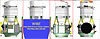
WISE in a Box
Download PDF (415KB)
Create a 3D model of the WISE spacecraft. |
|
|
Modeling the Universe
Visit
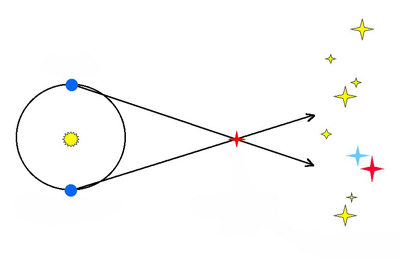
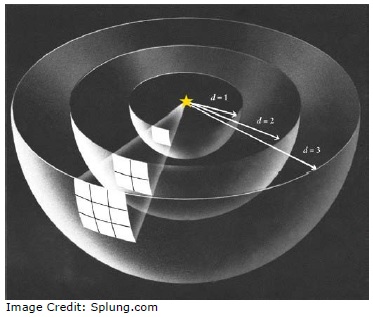
This is a workshop for teachers of grades 8-12 about the current scientific model for the structure and evolution of the
Universe and the evidence that supports that model. It is a collaboration of several NASA outreach programs, including WISE,
and is being presented nationally at conferences of science educators. As part of the workshop many different lessons are
presented. You can find each of those lessons at this website. |
| |
|
|
|
|
ImageJ Activity Guide
As scientists, astronomers do not only take pretty pictures, but also must produce quantitative (mathematical) analyses of these pictures. There are many different methods for analyzing astronomical images, and therefore many different software tools for doing this analysis.
The ImageJ Activity Booklet below provides instructions using a software program called ImageJ. The advantages of this program are that it is Java-based (so it can run on any computer), it is free, and it is relatively user-friendly.
The booklet begins with instructions on how to download ImageJ plus some additional astronomy-related plugins, followed by directions on how to install everything correctly (for both mac and pc). After you have everything installed, there are 4 lessons (about 15-20 minutes each) that will help you get oriented with some of the most basic image processing skills needed for analyzing astronomical images and making color pictures. The images you will need for the lessons are included below as well. There are questions throughout the booklet to help guide your thinking (answers provided at the end). Enjoy!
DOWNLOADS
ImageJ Activity Booklet (pdf) includes instructions for downloading and installing ImageJ and related sofware.
Material for Lesson 1: kermit.jpg (28kB)
Material for Lesson 2: quintet.fits * (4.1MB) right-click to 'Save Link As...'
Materials for Lesson 3: (making a color picture of M16 [the Eagle Nebula]): M16B.fits M16V.fits M16R.fits * (15.9 MB each) right-click to 'Save Link As...'
Material for Lesson 4: ngc7063_u.fits* (4.1 MB) right-click to 'Save Link As...'
Extra materials for making a color picture of the bow shock near Zeta Ophiuchi (infrared images from NASA's WISE mission): ZetaOph_WISE_B.fits ZetaOph_WISE_V.fits ZetaOph_WISE_R.fits * (63.9 MB each) right-click to 'Save Link As...'
Extra materials for making a color picture of M51(the Whirlpool Galaxy): M51B.fits M51V.fits M51R.fits * (4.1 MB each) right-click to 'Save Link As...'
* Note: To save the .fits images to your computer, either right-click (PC) or option-click (Mac) on the file name, then 'Save Link As...' to your desktop. DO NOT simply click on the image, as your browser will try to open it, and your browser will crash.
More in-depth lessons on using ImageJ can be found in the extensive online book An Introduction to Astronomical Image Processing with ImageJ.
|
| |
|
|
 |
|
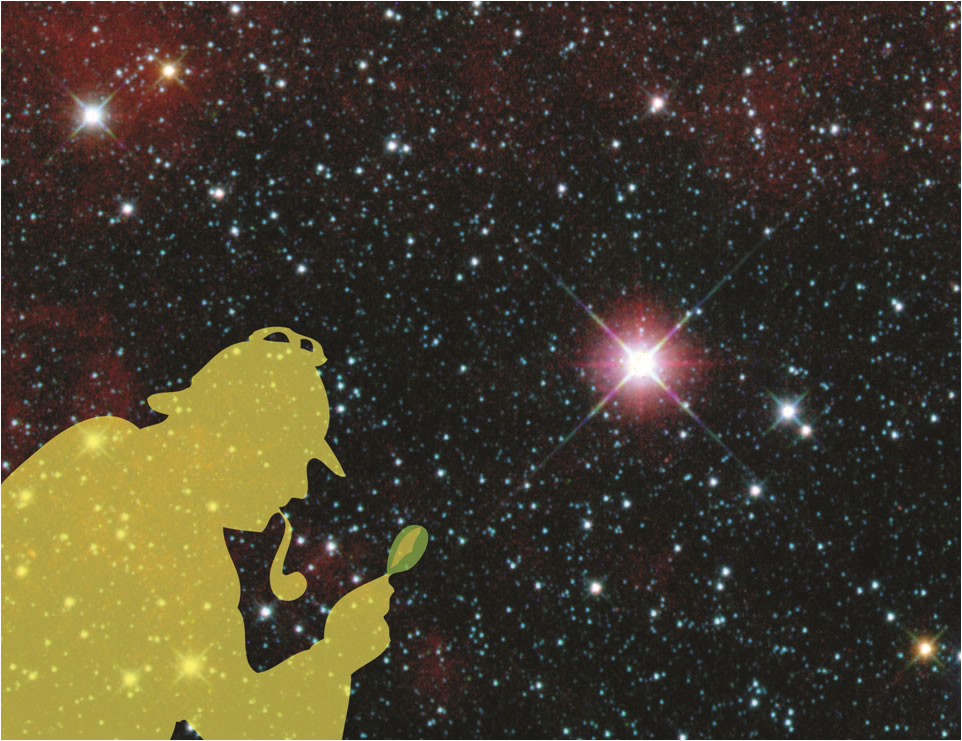
Light Detectives
In this activity, students use real NASA data to complete an investigation via the same basic methods that astronomers use. Students download data directly from NASA’s WISE mission. They then make measurements of those images with the image processing software SalsaJ, and eventually plot and analyze those measurements to find a brown dwarf. In the Going Further section, they follow the same process to find an Ultra-luminous Infrared Galaxy, or ULIRG, and then verify it by finding relevant images taken by the Hubble Space Telescope. The teacher engages and guides students along with the help of a slide show and discussion points. There are questions at the end of each section that the students can answer and turn in to be graded. Note: The current version is a draft that is in field testing.
Light Detectives Teachers Guide (pdf)
Light Detectives Student Guide (pdf)
Light Detectives Presentation (pptx)
Light Detectives Data Sheets (xlsx)
|
| |
|
|
| |
|
SEGway Education Page
Visit
A web site where you can find
over 20 lessons covering Earth Science (e.g. Surfing for Earthquakes and Volcanoes)
to Space Science (e.g.
The Light Tour) at grade levels from K-12. |
| |
|
|
 |
|
Cool
Cosmos
Visit
This website from the Spitzer Space Telescope gives an in-depth look at infrared
astronomy. It includes
classroom lesson, images, movies, and online tutorials. |
| |
|
|
 |
|
Multiwavelength
Milky Way
Visit
This website brings together several sets of image data of the Milky Way Galaxy
in different parts of the electromagnetic spectrum. Some tutorial pages explain
the nature of light, the structure of the Milky Way, and how maps of the Milky
Way are made from Earth. |
| |
|
|
 |
|
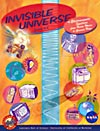
Invisible
Universe
Visit
In this GEMS guide,
developed in partnership with NASA's Swift Gamma-ray Burst mission and the Lawrence Hall of Science,
intriguing activities deepen student understanding of the electromagnetic
spectrum, enabling students to detect and consider wavelengths other
than visible light. Activities feature energy stations, including infrared
(TV remote); microwave (pager); ultraviolet (black light) and other devices.
Students come up with their own tests to see what blocks each wavelength,
and what does not. They learn how these other wavelengths can be used
to "see" things we cannot see with our eyes–allowing
space scientists to detect and image objects, phenomena, and sources
of energy far off in space. Colorful examples of these images are included
in the guide. |
| |
|
|
|
|
Active Astronomy:
Classroom Activities for Learning
About Infrared Light
Visit
A set of four activities from NASA’s SOFIA mission that focus on improving
student understanding of infrared light. These hands-on and demonstration activities
are designed to complement instruction on the electromagnetic spectrum for middle
and high school students; they are not a complete curriculum. Each activity has
been designed to take 1-2 class periods. |
| |
|
|
| |
|
Amazing Space
Visit
Located at the Space Telescope
Science Institute this interactive online K-12 Curriculum provides interdisciplinary
activities entitled: Star Light, Star Bright, Solar System Trading Cards, Hubble
Deep Field Academy, Student Astronaut Challenge, and Galileo to the Hubble Space
Telescope. |
| |
|
|
 |
|
Space
NASA Wavelength
Visit
NASA Wavelength is a growing collection of all NASA Space
Science classroom resources organized and searchable by grade level and
topic. |
| |
|
|
|
|